A great shaving soap should make shaving easier. That sounds obvious, but it is easy to get distracted by huge bowls of lather, long ingredient lists, exotic butters, or whatever ingredient happens to be popular at the moment. None of those things, by themselves, tell you whether a soap is actually good.
What matters is what happens when the razor touches your face. A good shaving soap should help the razor move smoothly across the skin, provide enough protection to keep the shave comfortable, and continue to offer lubrication even after most of the visible lather has been removed. It should also be forgiving when you add water. You should not need laboratory precision to build a useful lather. The fats, fatty acids, water balance, and other ingredients all play a part, which is why two soaps with similar ingredient lists can perform very differently.
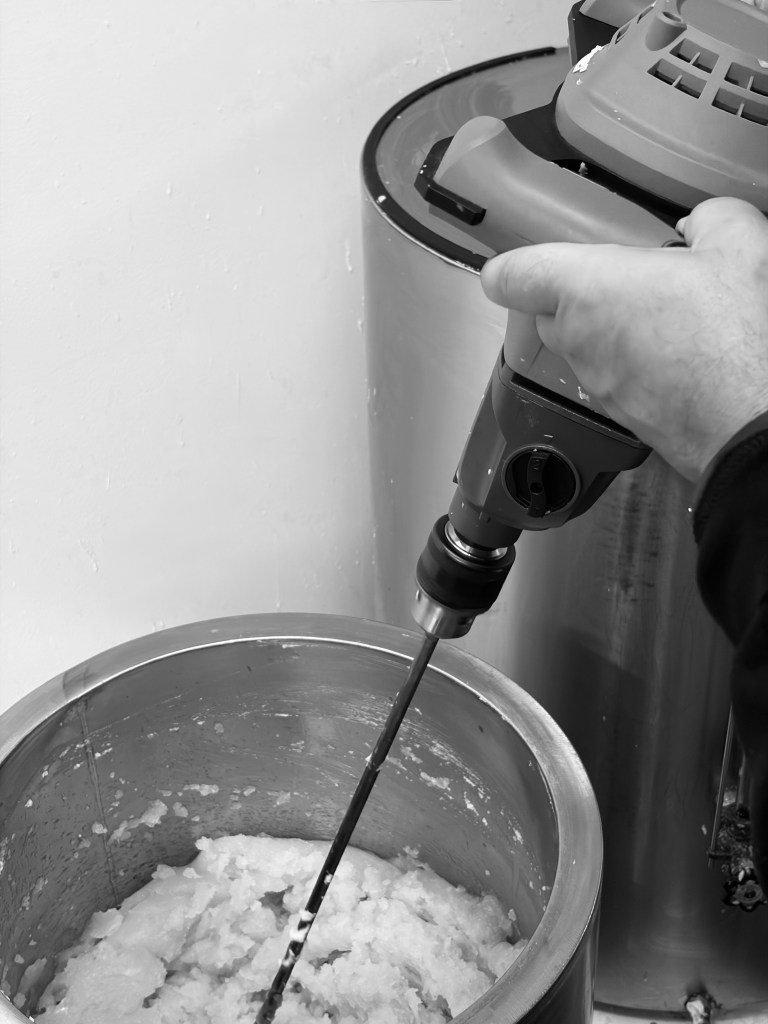
The foundation: fatty acids and soap chemistry
The fats and fatty acids in a shaving soap are a big part of what determines how it behaves. They affect how easily the soap lathers, how much water it can handle, how dense or creamy the lather feels, and how well it holds together during the shave. The chemistry behind this is called saponification, the reaction that turns fats and fatty acids into soap.
Stearic acid is especially important in many traditional shaving soaps because it helps build the dense, creamy lather shavers usually want. Palmitic acid also helps give the lather structure. Other fatty acids, including lauric, myristic, oleic, and ricinoleic, can influence things such as how quickly the soap lathers, how easily it dissolves, and how the finished lather feels.
Two shaving soaps can list many of the same ingredients and still behave differently. Their proportions and processing help explain why.
The role of tallow, oils and butters
Tallow has long been associated with traditional shaving soaps, and for good reason. Its fatty acid composition, particularly its stearic and palmitic acid content, makes it a useful ingredient for building a dense, stable lather. However, tallow alone does not determine the quality of a shaving soap.
Vegetable oils and butters can contribute different characteristics. Shea, kokum, mango, and other butters are often incorporated to influence the soap’s texture and skin feel, while oils such as castor can help shape lather behavior. Their effectiveness depends on how they are used and whether they are saponified or remain as unsaponified components in the finished formula.
Tallow-based and vegan soaps can both perform well. Comparing them is more useful when the focus stays on the finished lather rather than the source of the fats.
Sodium vs. potassium: why both matter
Most traditional shaving soaps are made with sodium hydroxide, potassium hydroxide, or a combination of the two. They are the ingredients that react with the fats and fatty acids to create soap. You may see them listed as NaOH and KOH, but what matters to the shaver is the different character they can give the finished product.
Sodium hydroxide generally helps produce a firmer soap. Potassium hydroxide tends to produce a softer soap that dissolves more readily in water and can be easier to lather. Many artisan shaving soaps use both because the formulator can balance firmness with ease of loading and lather development.
There is no single ideal ratio. It is simply another tool the formulator uses, along with the choice of fats, fatty acids, and manufacturing process, to determine how the finished soap behaves.
The hydration window
Water is one of the most important ingredients in a finished shaving lather, yet it’s frequently overlooked when evaluating soap performance. A shaving soap isn’t simply good or bad at producing lather. What matters is how that lather behaves as water is gradually introduced.
Every shaving soap has a usable hydration range. Too little water can leave the lather thick, pasty, and less lubricating than it should be. Too much water can eventually weaken its structure, causing it to become thin or unstable.
One characteristic worth looking for in a well-formulated shaving soap is a generous hydration window. Some soaps can accept substantial amounts of water while maintaining a cohesive, lubricating lather. This gives the user greater flexibility and makes it easier to find an effective balance between glide, protection, and comfort.
For the user, a forgiving hydration window means less trial and error when building lather.
Lather and cushion
Somewhere along the way, shaving enthusiasts began treating enormous, fluffy lather as proof of a great shaving soap. We have all seen the photos of brushes piled high with foam like Santa Claus’s beard. It looks impressive, but the size of the lather tells you very little about how well it will protect your skin.
What matters more is how the lather behaves on your face. A good lather should stay together, hold enough water to remain slick, and create a comfortable layer between the blade and the skin. Shavers often describe that sense of protection as cushion. It is subjective, but the basic idea is simple: does the lather make the razor feel controlled and comfortable as it moves across your skin?
A huge mound of airy foam is not necessarily better. A tighter, creamier, properly hydrated lather can provide just as much or more protection. The best test is what happens during the shave. Does the lather stay stable? Can you add water without it collapsing? Does your skin feel protected without the lather becoming pasty or overly thick? Judge it by how it performs, not by how high it piles up in the bowl.
Slickness and residual slickness
Once the lather is doing its job, the next question is simple: how easily does the razor move across your skin, and what happens after the blade has passed?
Slickness is the glide you feel while lather is still on the skin. A slick soap helps the razor move smoothly without dragging or skipping, especially in tougher areas or when shaving against the grain.
Residual slickness is what remains after the razor has removed most of the visible lather. That leftover lubrication matters when you make a short touch-up stroke or go back over an area without applying a fresh layer of soap.
Residual slickness is not the same as post-shave skin feel. A soap can leave your face feeling soft after rinsing and still offer very little lubrication once the visible lather is gone. They are both useful qualities, but they are different.
Modern ingredients: what do they actually do?
Modern shaving soaps often include ingredients that do jobs beyond simply turning fats into soap. Some help the lather hold water, some change its texture or stability, and some are there mainly to improve how the skin feels during or after the shave.
Humectants are ingredients that help attract and hold moisture. Glycerin is one of the most familiar examples and is common in shaving soap. Sodium lactate can also affect the firmness and handling of the finished soap. Neither ingredient automatically makes a soap slicker or better. As with most things in formulation, the amount used and the way it works with the rest of the recipe matter more than simply seeing the name on an ingredient list.
Helping lather hold together
Some modern shaving soaps also use ingredients that help the lather stay together, manage water better, or feel smoother on the skin. Hydroxyethylcellulose, xanthan gum, and guar derivatives are examples. In the right amounts they can improve texture and stability as water is added. Too much, however, can make a lather feel gummy or unnecessarily thick. More is not always better.
Emollients and skin feel
Emollients, such as squalane, lanolin, and certain fatty alcohols, help soften and smooth the skin and can influence how a shaving soap feels during and after the shave. Depending on the ingredient and the amount used, they may contribute to a richer skin feel or help reduce the sensation of dryness after rinsing.
Lanolin is an interesting example. Ariana & Evans moved away from using it in shaving soap because some people can be sensitive to it. Other established artisans have made similar choices. That does not mean lanolin is inherently bad or that soaps containing it are inferior. It simply illustrates that formulators sometimes remove even traditionally respected ingredients when they believe another approach may suit more users.
When evaluating these ingredients, distinguish comfort after rinsing from lubrication during the shave. A softer skin feel does not, on its own, establish better razor glide.
Fragrance and shaving performance
Fragrance is one of the pleasures of traditional wet shaving. For some people, scent is central to choosing a soap; others prefer little or none. Enjoying a fragrance and getting a comfortable shave are separate reasons to like a product.
Fragrance also introduces technical considerations for the soap maker. Different fragrance materials behave differently in an alkaline soap formulation. Depending on their composition and concentration, some can affect the soap’s texture, consistency, or stability. Certain materials may also cause discoloration over time. This is why a fragrance that performs beautifully in a perfume or aftershave may require additional testing and adjustments before it works successfully in a shaving soap.
Fragrance strength is another consideration. A more heavily scented soap isn’t necessarily better, and a lighter fragrance doesn’t indicate inferior craftsmanship. The appropriate concentration depends on the materials used, their compatibility with the soap base, and applicable safety limits.
One common misconception is that natural fragrance ingredients are inherently safer than synthetic ones. That simply isn’t true. Essential oils contain naturally occurring chemical compounds, some of which can cause irritation, allergic reactions, or other adverse effects when used improperly. Synthetic fragrance materials also vary in their safety profiles, and many have been extensively evaluated for cosmetic use. Neither natural nor synthetic automatically means safer.
Ultimately, fragrance should add to the experience without getting in the way of performance or skin comfort. And performance is only part of what makes a shaving soap well made. Fragrance safety, proper use levels, labeling, and regulatory compliance matter too. That is where IFRA standards and EU cosmetic requirements come into the picture.
IFRA standards and EU cosmetic compliance
IFRA Standards and EU cosmetic requirements serve different purposes. IFRA is an industry self-regulatory system, with standards that restrict, prohibit, or set specifications for certain fragrance ingredients. Compliance is mandatory for IFRA members, but the standards are not, by themselves, a general legal requirement for every soap maker. For fragrance mixtures, a supplier may issue a Certificate of Conformity for a specified intended use. As IFRA explains in its guidance on using the Standards, IFRA itself does not issue these certificates, and a certificate does not replace a finished-product safety assessment. Nor does IFRA certify individual soaps, fragrances, or brands. IFRA’s explanation of the Standards also distinguishes its voluntary industry framework from legally binding national and regional regulations.
EU compliance goes substantially further than an IFRA declaration alone. Under the EU Cosmetics Regulation, the finished product requires a documented safety assessment, with the assessment performed and signed by a suitably qualified assessor. The supporting information includes the identity and amount of the raw materials used, normally expressed as weight percentages, together with relevant composition and safety information about those materials. This is information supplied for the safety assessment, not a requirement to print the complete formula and percentages on the jar. The European Commission’s CPSR guidelines explain these composition requirements.
The wider EU framework also requires a designated Responsible Person, a Product Information File, good manufacturing practice, compliant labeling, and notification through the Cosmetic Products Notification Portal before a product is placed on the market. These are legally enforceable obligations. The safety assessor’s signed conclusion is part of the compliance process; it is not a general EU government approval or certification of the product or brand.
Labeling is another important distinction. Certain fragrance allergens must be named individually in the ingredient list when they exceed the applicable thresholds in the finished product. For rinse-off products such as shaving soap, the usual threshold is above 0.01%; for leave-on products it is above 0.001%. These requirements apply to the specified allergens whether they come from essential oils, synthetic materials, or a combination. The European Commission’s fragrance allergen guidance explains the expanded labeling rules and transition dates.
We at Ariana & Evans, the publisher of The Lather Ledger, have completed EU cosmetic safety assessments for products within our range. Other American artisans supplying the EU market are subject to the same compliance obligations. Assessment documentation applies to the products and formulations it covers, rather than providing a blanket certification of an entire brand. This work concerns safety and accountability; shaving performance still needs to be evaluated separately.
What actually defines a great soap?
A great shaving soap should do a few things very well. It should build a stable lather, hold enough water to stay comfortable and useful, help the razor move easily across the skin, and continue to provide lubrication after the visible lather has been removed.
It should also be forgiving. You should not need perfect technique or an exact amount of water to get a good shave. Different formulas can reach that goal in very different ways, which is why one ingredient or one style of soap does not define quality.
In the end, the best shaving soap is not the one with the longest ingredient list, the biggest mound of lather, or the most fashionable additive. It is the one that makes the shave smoother, more comfortable, and easier to repeat consistently. Everything else is part of the experience, but the shave itself is still the standard.


Leave a Reply