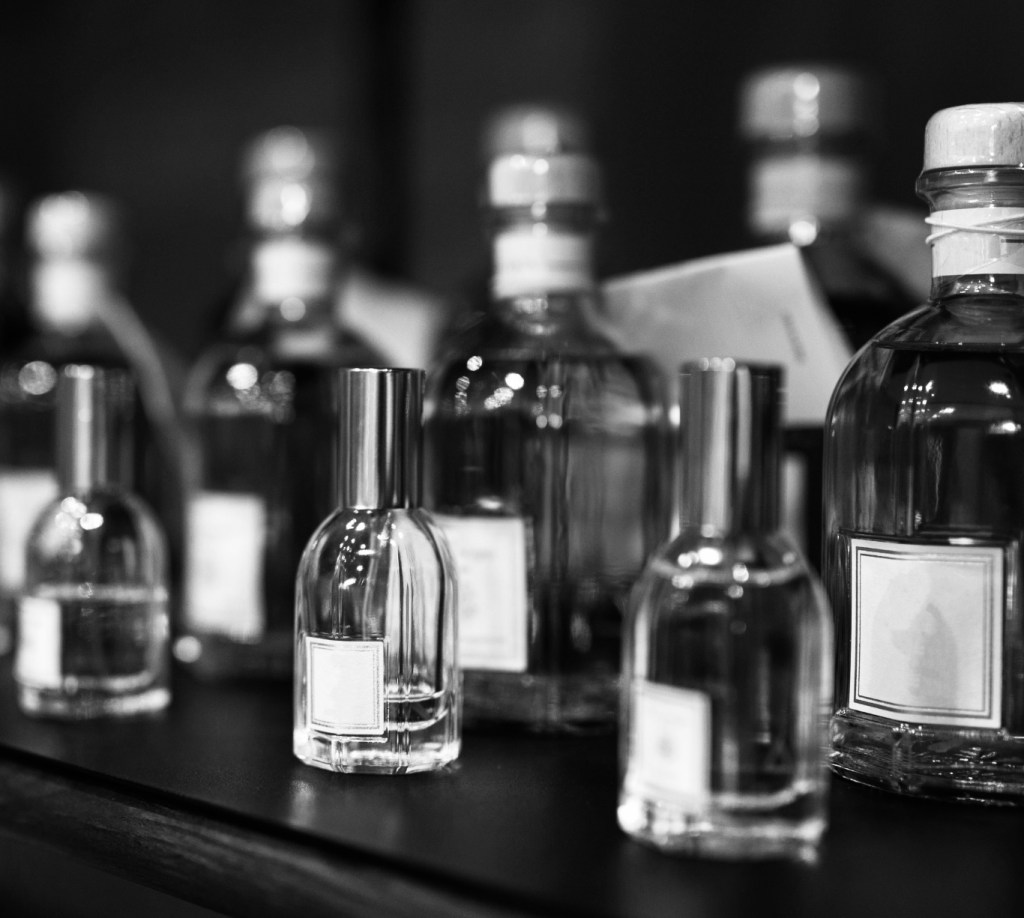
Fragrance people love categories. Fougère. Chypre. Amber. Woody. Aromatic. Gourmand. Very helpful, until somebody asks what any of that actually means.
The problem is that fragrance families are useful, but they are not laws of nature. They are more like a way of organizing a very messy room.
They give you a starting point, not the whole story.
A fragrance can lean fougère and still have leather in it. A chypre can be fruity. An amber can be dry instead of sweet. A woody fragrance can smell completely different depending on which woods are doing the work.
Some fragrances comfortably sit in more than one family, so this is not about memorizing categories. It is about understanding the structure underneath them.
Let’s Start With Fougère
Fougère means “fern” in French, which is funny because ferns do not actually smell like a fougère.
The classic structure is built around a recognizable combination of lavender, coumarin and mossy material, historically oakmoss.
Lavender brings aromatic lift. Coumarin brings that soft, sweet, hay-like warmth. Oakmoss adds earth, dryness and depth.
From there, almost anything can happen. A fougère can be clean, green, barbershop, spicy, modern or old-school. It can lean into citrus, woods, musk, leather or amber.
Houbigant Fougère Royale is the obvious historical reference. It is essentially where the family got its name. Azzaro Pour Homme is another fragrance many people will recognize as part of the classic masculine fougère tradition.
But they do not smell identical. That is the point. The structure is what connects them.
Chypre
Chypre is another family people throw around without always explaining it.
The classic chypre idea is built around citrus on top, usually bergamot, with a dry, mossy, woody base beneath it.
Traditionally, oakmoss and labdanum played major roles.
Chypre tends to have more tension than a fougère. It can feel sharper, drier and more polished. Sometimes almost bitter in a beautiful way.
There is usually contrast between the brightness at the top and the earthier structure underneath. That contrast is the point.
Coty Chypre, released in 1917, became the reference that gave the family its modern name. Guerlain Mitsouko is another classic example and shows how fruit can sit beautifully inside a chypre structure.
A fruity chypre is still a chypre. A floral chypre can still be a chypre. A leather chypre can push the same basic architecture somewhere completely different.
Again, the family tells you something about how the fragrance is built, not exactly what it will smell like.
Amber
This one deserves a little explanation because the language has changed.
A Quick Note About “Oriental”
For decades, the fragrance industry commonly used the term Oriental for warm, resinous, spicy fragrances built around things like labdanum, benzoin, vanilla, balsams, woods and spices.
Today, Amber is increasingly used instead.
So if you are reading an older perfume book or looking at an older fragrance classification, you may see Oriental, Soft Oriental, Floral Oriental and Woody Oriental.
In newer classifications, those are generally described as Amber, Soft Amber, Floral Amber and Woody Amber.
The fragrance did not suddenly change. The terminology did.
That is worth understanding because both sets of terms are still floating around.
Years ago, for example, I would have described Chasing the Dragon as a Woody Oriental.
Today I would call it a Woody Amber.
The woods give it one side of its personality, while the warmer resins, spice and other materials pull it into the amber family.
That is a good example of why these categories overlap.
So What Does Amber Smell Like?
Amber usually revolves around warmth. Resins. Vanilla. Labdanum. Benzoin. Spices. Sometimes woods. Sometimes balsams. Sometimes quite a bit of sweetness.
But amber does not automatically mean syrupy or sweet.
It can be dry, smoky, resinous, spicy or leathery.
Wet shavers will know Tom Ford Tobacco Vanille. Tobacco, vanilla, cocoa, dried fruit, tonka and sweet woods put it squarely in warm amber territory, with a strong gourmand side to it.
Nasomatto Black Afgano shows another direction entirely. Cannabis, resins, woods, tobacco, coffee, oud and incense push it toward the smoky, woody side of amber. It is a useful reminder that amber does not have to smell soft or sugary.
Guerlain Shalimar remains one of the great historical reference points, while something like Serge Lutens Ambre Sultan takes amber in a more resinous, herbal direction.
Same family, completely different personality.
Woody
We already spent an entire article proving why “woody” is not nearly specific enough.
Sandalwood, cedar, guaiac, hinoki and oud can all live here, and they do not smell remotely alike.
Woody fragrances are often defined by the materials creating the backbone. Sometimes the wood is the star. Sometimes it is holding everything else together.
Creed Aventus is a reference wet shavers know very well. Its bright citrus and pineapple opening gets most of the attention, but birch and patchouli give the fragrance a dry woody structure underneath all that fruit.
Terre d’Hermès is another useful example because its woody character sits alongside citrus and mineral effects.
Encre Noire takes things somewhere completely different, with vetiver giving the fragrance an extremely dry, woody impression.
And yes, I know vetiver is a root. We already let it hang around at the bar in the last article.
Aromatic
Aromatic fragrances usually lean heavily into herbs and fresh plant materials.
Lavender. Rosemary. Sage. Basil. Thyme. Sometimes mint. Sometimes green notes.
This family overlaps heavily with fougère because many of those same aromatic materials can appear in both.
Acqua di Parma Colonia is a good example of how citrus and aromatic materials can work together.
And a fragrance like Dior Eau Sauvage shows why these classifications are not airtight. Depending on what part of the composition you are concentrating on, you can talk about citrus, aromatic and chypre characteristics.
That is not a contradiction. It is fragrance.
Citrus
This one sounds easy. Lemon. Bergamot. Orange. Grapefruit. Mandarin. Petitgrain. Easy, right? Except, once again, it is not quite that simple.
Citrus fragrances can be bright and sparkling, green and bitter, sweet and juicy, or dry and cologne-like.
Acqua di Parma Colonia is one of the classic reference points for the traditional citrus cologne style.
Citrus materials are naturally volatile, though, which means they tend to disappear more quickly.
That creates one of the challenges for the perfumer: how do you keep that brightness alive without turning the fragrance into something else? Usually the answer is what is underneath it.
Floral
Floral may be the broadest family of all.
Rose and jasmine alone could probably support an entire publication.
You can have white florals, rose fragrances, powdery florals, green florals, fruity florals and floral ambers.
Dior J’adore is an obvious modern floral example. Chanel No. 5 is another, although it also demonstrates how aldehydes and other materials can completely change what we expect a floral fragrance to smell like.
A floral fragrance does not have to smell feminine. That idea should probably have died years ago. Materials do not have gender. Marketing departments do.
Leather
Leather is interesting because there is no bottle of leather essential oil sitting on the perfumer’s shelf.
Leather is created. A perfumer builds the impression using combinations of smoky, tarry, woody, animalic, suede-like and sometimes floral materials.
Birch tar. Labdanum. Styrax. Isobutyl quinoline. Saffron effects. Musks. Woods.
There are many roads to leather.
Hermès Bel Ami gives you one style of classical leather. Tom Ford Tuscan Leather gives you a much more modern interpretation, famously pushing leather alongside fruity and saffron-like effects.
One can feel like an old leather chair. Another can feel like a new leather jacket. Same basic family, different idea.
Gourmand
Gourmand fragrances smell edible, or at least suggest food: vanilla, chocolate, coffee, caramel, honey, praline, pastry, rum, fruit.
Mugler Angel is one of the fragrances most associated with establishing the modern gourmand category.
Choco Cubano is a good example of how a gourmand can straddle several families at once. Chocolate, coffee, vanilla, fig and rum give it an obvious edible side, but tobacco, cedar and sandalwood pull it into woody and amber territory too.
That is exactly why I do not like forcing fragrances into one box when they clearly do more than one thing.
Maison Margiela By the Fireplace is another example of gourmand ideas mixed with smoke and wood.
This family can get dangerous quickly. A little sweetness can be beautiful. Too much and suddenly you smell like somebody left dessert in a hot car. Balance matters.
The best gourmands usually have something underneath the sweetness creating contrast: wood, tobacco, spice, leather, resin, something to keep it from becoming too much.
Aquatic and Marine
Aquatic fragrances are fascinating because much of what people recognize as the smell of an aquatic fragrance does not come directly from seawater.
The perfumer creates an impression: water, sea air, ozone, minerality, coolness, open space.
Modern aroma materials made this category possible in a way natural materials alone really could not.
Davidoff Cool Water became one of the defining examples of that fresh aquatic style. Acqua di Giò took the idea in another direction and became one of the most recognizable marine fragrances ever made.
Wet shavers may also know Aqua de Boracay, which brings that same aquatic idea into our own little corner of the fragrance world.
This is also a good reminder that synthetic materials are not somehow the enemy of good perfumery. Sometimes they make an idea possible.
Why These Families Matter
Fragrance families give you a map. That is really what they are.
If somebody tells you something is a fougère, you have a general idea of the territory.
If they tell you it is a Woody Amber, you know you are probably heading somewhere warmer, deeper and more resinous.
If they say chypre, you can expect some contrast between brightness and a drier mossy or woody structure.
But none of those words tells you exactly what you are going to smell.
The materials matter. The proportions matter. The quality of those materials matters. And the decisions made by the perfumer matter. That is the part I find interesting.
The category tells you where the trip starts. The perfumer decides where you end up.
One Last Thing
Do not get too hung up on the boxes. A fragrance can sit between families, borrow from three of them, or start one way and dry down into something completely different. That does not necessarily mean somebody classified it incorrectly. It means fragrance is complicated, which is exactly why we keep talking about it.


Leave a Reply